Table of contents
Cross-border selling within the European Union can quickly become overwhelming due to varying tax regulations and compliance requirements. Understanding how utilizing a single VAT number can transform the complexities of EU e-commerce sales is essential for any business looking to expand its reach. Delve into the sections ahead to discover how this streamlined approach benefits both established and emerging online retailers.
How VAT works in the EU
The Value-Added Tax (VAT) system in the European Union is a harmonized consumption tax applied to goods and services at each stage of production and distribution, playing a fundamental role in the digital economy. For online retailers engaging in cross-border sales, EU VAT regulations require careful attention, as VAT must be charged in the EU country where the customer is located. This means that any taxable person—such as businesses or individuals regularly supplying goods or services in the EU—must undertake VAT registration in the relevant member states unless they opt for a single VAT number under schemes like the One-Stop Shop (OSS). E-commerce compliance is not merely a legal formality; it is the foundation for participating lawfully and competitively in the EU market, as failure to comply can result in penalties and business disruptions.
For cross-border sales, VAT is collected based on the destination principle, meaning the VAT rate of the buyer’s country is applied rather than that of the seller’s location. This approach ensures fair competition and prevents double taxation or tax evasion across EU member states. The system also addresses digital services, physical goods, and marketplace transactions, assigning clear VAT obligations to online retailers and marketplace operators. Businesses identified as taxable persons must carefully monitor their VAT thresholds and reporting duties, as exceeding certain sales limits can trigger mandatory VAT registration in multiple countries, unless consolidated through schemes designed to streamline the process.
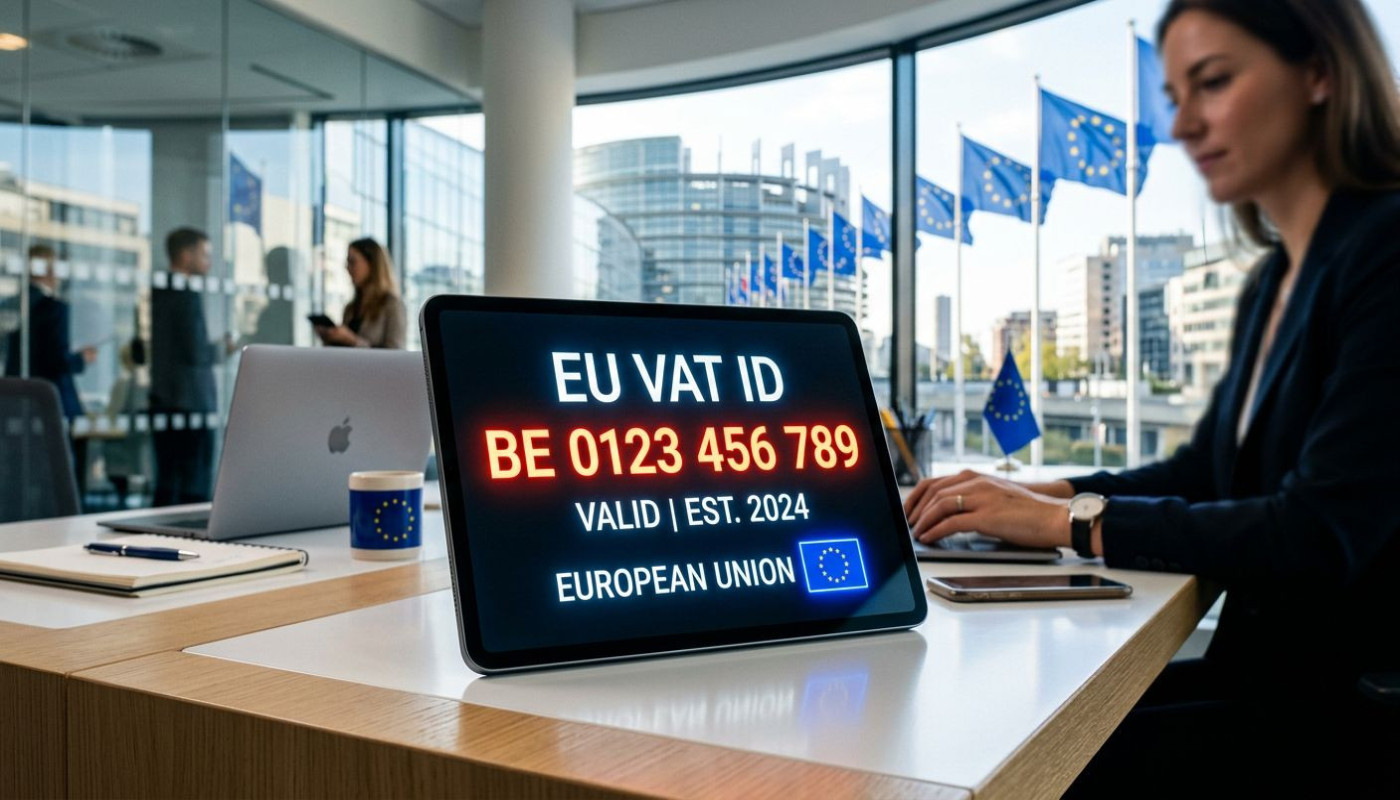
E-commerce compliance involves not only correct VAT registration but also timely filing of VAT returns, accurate invoices, and proper record-keeping. Digital platforms and online retailers operating in multiple EU countries benefit significantly from the harmonization of the VAT system, as it provides a unified framework for cross-border sales. Utilization of a single VAT number, where possible, greatly reduces administrative burdens, allowing businesses to manage sales across the entire EU without multiple registrations. This simplification directly supports growth, efficiency, and transparency for taxable persons involved in online commerce.
Understanding the EU VAT framework is indispensable for any business planning to expand into Europe’s vast e-commerce market. As a taxable person, an online retailer must prioritize e-commerce compliance, keeping abreast of changes in tax legislation and technological solutions that facilitate VAT registration and reporting. By mastering these requirements, businesses not only avoid costly mistakes but also position themselves to thrive in an increasingly integrated digital marketplace where cross-border sales are the norm.
The one-stop shop solution
One-Stop Shop (OSS) is a transformative digital platform introduced in the European Union to streamline VAT compliance for online business operations across multiple member states. With OSS registration, a business can report and remit EU tax on all cross-border B2C sales using just a single VAT number, bypassing the need for separate VAT registrations in each country where customers are located. This VAT simplification mechanism means taxable persons file one consolidated OSS return every quarter, listing all relevant transactions. The OSS system is designed to alleviate the administrative workload that previously required complex, country-specific processes, ensuring that cross-border e-commerce is more accessible and less resource-intensive for businesses of all sizes.
By centralizing the reporting process, One-Stop Shop enables online business owners to manage compliance efficiently while reducing risks of errors and penalties linked to divergent national rules. The single VAT number granted after OSS registration becomes the only identification needed for EU tax purposes within the scope of cross-border sales, greatly simplifying obligations. This innovation is particularly beneficial for enterprises expanding into new European markets, as it removes traditional barriers and supports seamless growth, making VAT simplification a key asset in today’s evolving e-commerce landscape.
Benefits for online retailers
Adopting a single VAT number through the EU's One-Stop Shop (OSS) system offers numerous VAT benefits for e-commerce businesses aiming for swift e-commerce growth. By allowing cross-border sales under one VAT identification across multiple member states, companies can achieve simplified accounting, which minimizes administrative burdens and reduces the risk of costly errors. In practice, this system enhances cash flow management by enabling the deduction of input VAT in one consolidated return, instead of handling separate filings in each country of sale. This not only lowers operational expenses but also accelerates the speed of transactions, benefiting both the retailer and the customer.
For online retailers, accessing the OSS system dramatically streamlines market entry into the expansive EU landscape. The process of registering, reporting, and remitting VAT obligations becomes much less complex, as the need to register for VAT in every single EU country where goods are sold is eliminated. This harmonized approach to VAT obligations encourages business expansion by reducing upfront barriers and ongoing compliance costs. As a direct result, retailers can focus their resources on scaling operations, improving product offerings, and entering new markets with greater agility and confidence.
The OSS scheme is closely linked with IOSS registration, which is particularly relevant for companies selling goods valued up to 150 euros directly to EU consumers. Using IOSS registration allows for the declaration and payment of VAT on distance sales of imported goods, further supporting robust e-commerce growth and efficient EU market entry. This framework ensures businesses are equipped for the demands of a diverse EU customer base, fostering sustainable development and competitiveness in the digital marketplace.
Compliance challenges and solutions
Navigating VAT compliance within the EU presents several complex e-commerce challenges for online sellers, particularly due to diverse country-specific rules, language barriers, and evolving digital tax reporting requirements. Adhering to EU regulations is further complicated when taxable persons exceed the distance selling threshold, previously requiring VAT registration in each member state where sales were made. With the implementation of the One Stop Shop (OSS) regime, these obstacles are significantly reduced, as sellers can now report and remit VAT through a single portal, streamlining tax reporting on cross-border sales. Best practices for staying compliant include using robust accounting software tailored to e-commerce, regularly monitoring legislative updates, and leveraging multilingual digital platforms that simplify communication and documentation. Advanced automation tools can also help identify changes in distance selling thresholds and country-specific obligations, ensuring timely and accurate filings while minimizing administrative burdens for businesses operating in multiple EU markets.
Future of EU e-commerce VAT
EU VAT trends are rapidly evolving as policymakers respond to the digital tax future, aiming to create a more seamless and harmonized tax environment across member states. The introduction of the One-Stop Shop (OSS) and the increasing reliance on electronic interface platforms for cross-border transactions mark a pivotal shift in VAT legislation. Regulatory updates now frequently target both compliance streamlining and the mitigation of tax evasion within the digital single market. Looking ahead, policymakers are considering extending VAT obligations to a broader spectrum of digital services and goods, potentially covering even more actors within the supply chain. Emerging technologies such as real-time digital reporting, blockchain for transaction tracking, and advanced AI-driven compliance tools are poised to further transform the landscape of e-commerce innovation. Businesses operating within the EU’s digital marketplace should monitor legislative developments and invest in adaptable, technology-driven solutions to ensure ongoing compliance amid shifting regulatory requirements. Staying informed and proactive will empower companies to capitalize on new opportunities and avoid costly penalties as the regulatory framework continues to modernize.
Similar

How Obtaining An LEI Enhances Business Transparency And Trust

Expanding Your Fundraising Impact With Innovative Raffle Strategies